
MANU-SCRIPT UPDATES
New publication: Mutualism and Antagonism in a Post-Extinction Hawaiian Bird–Lobelioid Pollination System
I'm excited to share that our latest research has been published in Ecology and Evolution.
This study explores how the extinction of Hawaiʻi's specialized nectar-feeding honeycreepers has reshaped interactions between native birds and endangered Hawaiian lobelioids. Using more than 12,900 hours of motion-triggered camera observations alongside experimental manipulations of nectar robbing, we examined how contemporary bird–flower interactions function as pollination, nectar robbing, or both, and how these behaviors influence floral resources and plant reproduction.
Key findings
Native nectarivorous birds contacted floral reproductive structures during 43% of flower visits, demonstrating that pollination continues despite the loss of historically specialized pollinators.
Nectar robbing was common, occurring in 39% of flower visits, with Hawaiʻi ʻAmakihi robbing nectar more frequently than ʻIʻiwi.
Experimental simulations using a 3D-printed Hawaiʻi ʻAmakihi bill showed that nectar robbing can alter subsequent nectar replenishment, with responses differing among lobelioid species.
Despite frequent nectar robbing and altered nectar dynamics, fruit development, seed fill, and germination remained high, indicating that these endangered plants continue to reproduce successfully under contemporary pollination conditions.
Together, these findings demonstrate that post-extinction bird–flower interactions simultaneously include both mutualistic (pollination) and antagonistic (nectar robbing) processes, illustrating how biodiversity loss can fundamentally reshape ecological interactions while maintaining important ecosystem functions.
This work provides one of the most detailed mechanistic studies of how pollination systems continue to function following extinction, revealing how the remaining native nectar-feeding birds sustain reproduction of endangered Hawaiian lobelioids while reshaping the balance between cooperation and antagonism within the ecosystem.
Read the paper: https://onlinelibrary.wiley.com/doi/10.1002/ece3.74123
Watch the YouTube Video: https://youtu.be/uxhsbKTbajc?si=z-zUtEu0nH0Xjr7K
New publication: Bird extinctions shift bill–flower trait matching in Hawaiian lobelioids
I'm excited to share that our latest research has been published in Functional Ecology.
This study explores how the extinction of Hawaiʻi's native nectar-feeding birds has reshaped interactions between birds and one of the islands' most iconic plant radiations, the Hawaiian lobelioids. By combining measurements from museum specimens with contemporary field observations, we tested whether changes in bill–flower trait matching can explain how pollination interactions have changed following extinction.
Key findings
Historical bird communities possessed a much broader range of bill lengths than today's assemblages, including several extinct long-billed nectarivores.
Across most Hawaiian Islands, bird extinctions have shifted communities toward increasingly mismatched bill–flower combinations, with remaining birds generally having bills that are too short for many native lobelioid flowers.
Bill–flower trait matching strongly predicted interaction outcomes. Birds whose bill lengths more closely matched flower lengths were more likely to contact pollen-bearing structures, while mismatched birds were more likely to nectar rob flowers without effectively pollinating them.
These findings demonstrate a direct mechanistic link between species extinctions, changes in functional trait distributions, and the balance between mutualistic and antagonistic interactions.
More broadly, the study provides a framework for understanding how biodiversity loss can alter ecological function through changes in the traits that mediate species interactions, even when historical interactions cannot be directly observed.
This work represents an important step toward reconstructing how extinct Hawaiian bird communities functioned and understanding the ecological consequences of their loss.
Read the paper:https://besjournals.onlinelibrary.wiley.com/doi/10.1111/1365-2435.70415
The Lost Manu Research Initiative is a research project focused on endangered and extinct bird-plant interactions in Hawaiʻi. The work integrates field ecology, museum collections, 3D modeling, camera-based behavioral research, and conservation partnerships to understand how bird declines and extinctions reshape ecosystems, and what those changes mean for rare native plants and their interactions.
Built through place-based collaborations across Hawaiʻi, Lost Manu connects ecological theory with conservation-relevant science. Its work measures the functional consequences of bird loss for pollination and ecological network structure, while producing research outputs that can inform future restoration of rare species and their interactions.
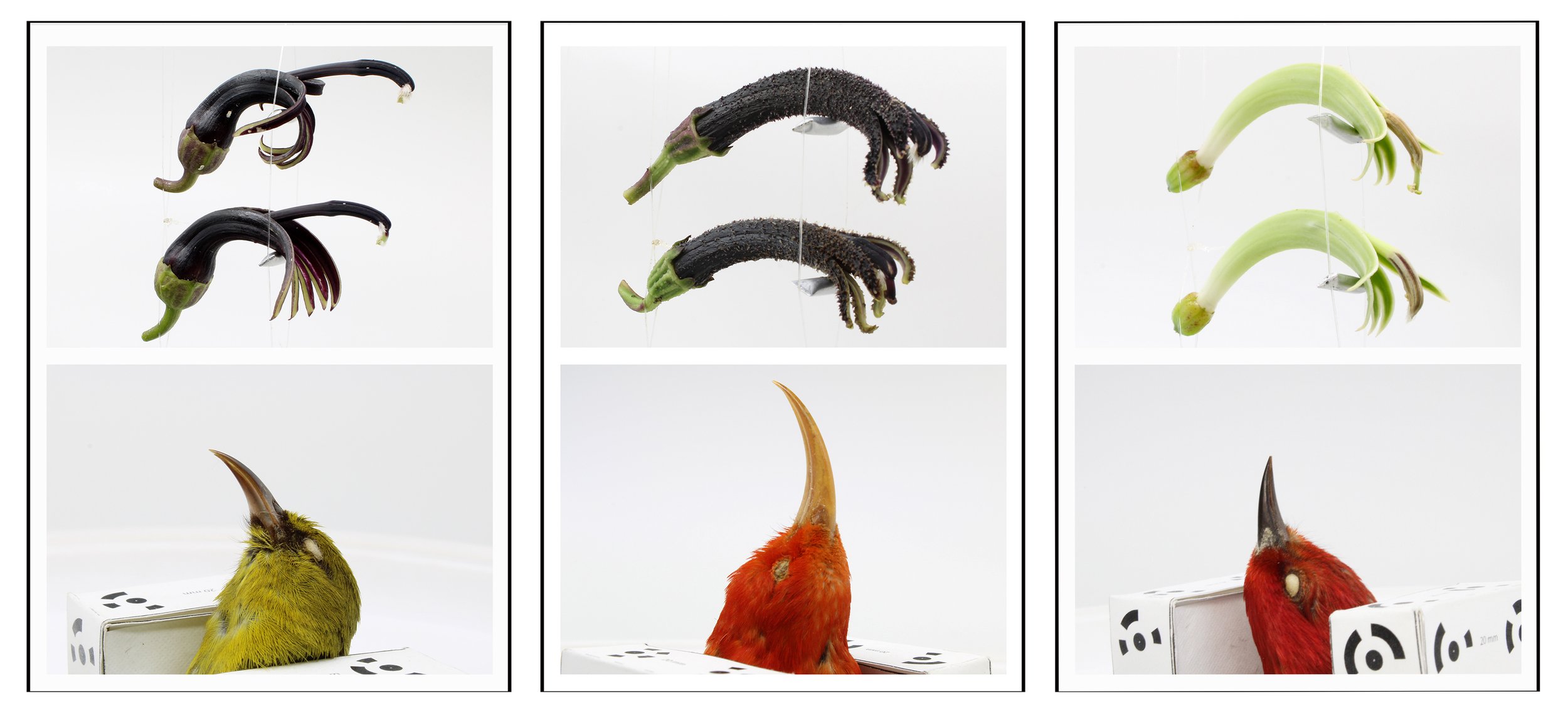
The Hawaiian Islands are among the most evolutionarily distinctive ecosystems on Earth, and also among the most heavily altered. Over millions of years, isolation produced tightly linked bird and plant relationships, especially among nectar-feeding honeycreepers and lobelioids. In recent centuries, that system has unraveled. Dozens of endemic bird species are gone, and most of those that remain are now endangered or declining. Many of these birds were the primary pollinators in these forests. As they disappear, those ecological roles disappear with them, and the processes that structure these ecosystems begin to break down. What remains is a partial system, where many of the interactions that shaped plant evolution are no longer present or clearly understood.
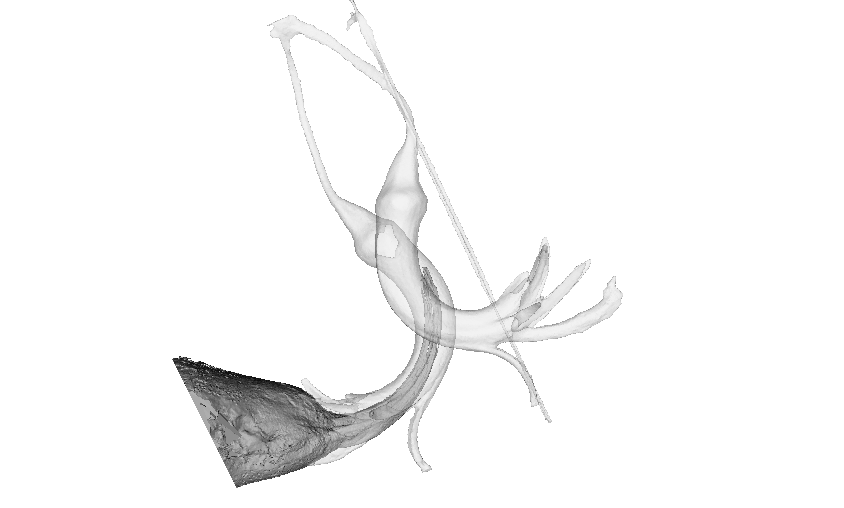
This raises an important challenge for conservation. How do we reconstruct ecological relationships that are no longer visible in the present system? The Lost Manu Research Initiative approaches this by treating extinct interactions as testable hypotheses. We draw on museum collections, ecological data, and new analytical tools to evaluate which plant and bird species likely interacted, and how those interactions functioned. This includes trait-based analyses and three-dimensional modeling approaches developed in collaboration with the Burke Museum and the Behavioral Ecophysics Lab. These methods allow us to quantify how well bird bills and floral structures match, something that cannot be observed directly for extinct species. By combining historical specimens with modern analysis, this work identifies which interactions structured Hawaiian ecosystems in the past and which may still be recoverable today.
Dr. Samuel B. Case is an ecologist studying how extinction, invasion, and environmental change reshape plant-animal interactions. He leads the Lost Manu Research Initiative and is affiliated with the University of Washington, the Maui Forest Bird Recovery Project, and the Bernice Pauahi Bishop Museum.
Mahalo to the organizations and partners who support this work, including the Burke Museum, Bernice Pauahi Bishop Museum, Maui Forest Bird Recovery Project, The Nature Conservancy, the Plant Extinction Prevention Program, the U.S. Fish and Wildlife Service, Lyon Arboretum, and the Puʻu Kukui Watershed Preserve, as well as to the undergraduate researchers at the University of Washington, field technicians, and volunteers whose time and effort make this work possible. Thanks also to the staff, land managers, and stewards who support access and care for the ʻāina across Hawaiʻi.